What are AAC symbols?

AAC stands for Augmentative and Alternative Communication. It is any way of communicating that supports or replaces speech.

AAC symbols are pictures that stand in for words. A child might point to them on a board, tap them on a tablet, or follow them in a visual schedule or social story.

For children who find speech hard, or who think better in pictures, symbols can support communication.

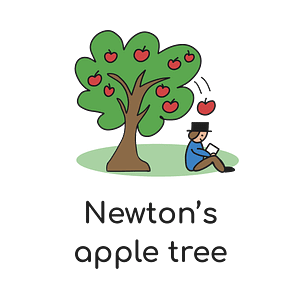
Illustration of Newton's apple tree, a tree with red apples and Newton sitting beneath it with an apple falling on his head.

External links and support

Here are some links that you may find useful. They are charities and organisations which have support and advice. Links are provided for information only and inclusion does not imply endorsement. We are not responsible for the content of external links.

Cambridgeshire local symbols

AAC symbol sets often contain everyday items such as food, emotions, and actions. They don’t usually have symbols for particular areas or places.

We have drawn symbols for places in Cambridgeshire and Peterborough to help those who live in or visit the area. You can use them on their own, or with any other symbol set.

The set has symbols for hospitals, museums, churches, outdoor spaces, and transport. We have drawn symbols for places in Cambridgeshire and Peterborough to help those who live in or visit the area. You can use them on their own, or with any other symbol set. Place names are used for identification only. This resource is not affiliated with or endorsed by any of the places listed here. 

This project is supported by the Cambridgeshire & Peterborough Combined Authority (CPCA), delivered through Allia Impact Ltd, which funds work in this region. That is why we focused on this area.

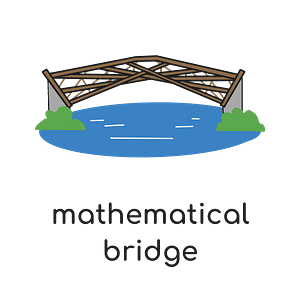
Illustration of the Mathematical Bridge, a wooden arched bridge over blue water.
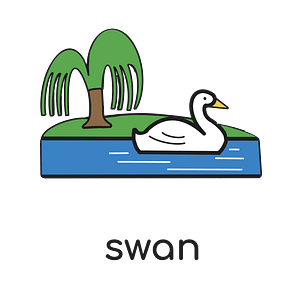
Illustration of a white swan on blue water beside a weeping willow tree.

AAC Symbols

Alternative communication for  children with speech and language differences

You can download the symbols in two different formats. Please see the license below for allowable use. This is to support different access methods and learning preferences:

PNG icon – simple symbol for everyday use in AAC, visual timetables, choice boards, and worksheets
PDF – all icons in a PDF printable sheet to download

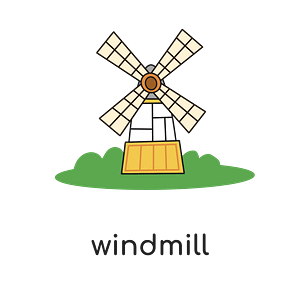
Illustration of a traditional windmill with white sails.

Days out

Symbols of what families might see on a day out

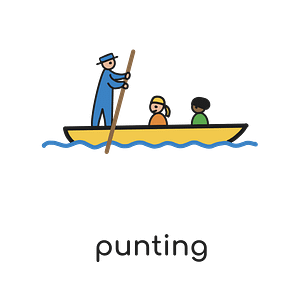
Illustration of three people in a wooden punt boat on water, one standing with a long pole.

Activities

Symbols about local activities

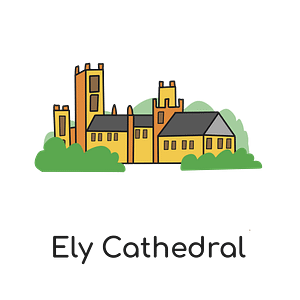
Illustration of Ely Cathedral, a yellow stone cathedral with towers and grey roofs.

Places

Places, churches, and landmarks

Illustration of the Corpus Clock, a circular gold clock with a blue dragon-like creature on top.

Interesting things

Interesting things to see out and about

Cambridgeshire symbol library - alphabetical index

Illustration of a blue accessible bicycle with a basket at the front.
Illustration of Addenbrooke's Hospital, a white building with a red cross sign above the entrance.
Illustration of the Botanic Gardens, a fountain in a round pond with green plants and trees behind.
Illustration of a busker sitting and playing guitar, with musical notes floating around them.
Illustration of Cambridge train station, a blue modern building with a train visible.
Illustration of the Corn Exchange building, a yellow arched building with a man playing guitar outside.
llustration of a single white and brown cow in a green field with trees behind.
llustration of two brown cows grazing in a green field with a tree.
Illustration of a DNA double helix in blue, red, yellow, green and black.
Illustration of two ducks swimming on blue water.
Illustration of Ely Cathedral, a yellow stone cathedral with towers and grey roofs.
Illustration of the Fitzwilliam Museum, a grey stone building with tall columns.
Illustration of Grafham Water, with sailing boats on blue water under a yellow sun.
Illustration of a green bus travelling along the guided busway, with green hedges behind.
Illustration of Hinchingbrooke Hospital, a white building with a red cross sign above the entrance.
Illustration of IWM Duxford, a green aircraft hangar with a blue plane inside.
Illustration of Jesus Green, a grassy park area with trees and a yellow path running through.
Illustration of Jesus Green lido, an outdoor swimming pool with the sun shining above.
Illustration of King's College, a tall yellow gothic chapel with two towers.
Illustration of Market Square, a row of market stalls with colourful striped awnings and small figures shopping.
Illustration of the Mathematical Bridge, a wooden arched bridge over blue water.
Illustration of the Museum of Zoology, showing a large whale skeleton on display with two visitors looking up at it.
Illustration of a green and yellow steam train pulling carriages, with grey steam clouds above.
Illustration of Newton's apple tree, a tree with red apples and Newton sitting beneath it with an apple falling on his head.
Illustration of Parkside Pool, an indoor swimming pool with a curved blue roof.
Illustration of Peterborough Cathedral, a yellow stone cathedral with two tall spires.
Illustration of Peterborough Hospital, a white building with a red cross sign above the entrance.
Illustration of three people in a wooden punt boat on water, one standing with a long pole.
Illustration of the Round Church, a grey stone round building with a pointed roof on a patch of green.
Illustration of three rowers in a long boat on water.
Illustration symbol of science centre, yellow building with science symbol over door.
Illustration of a splash pad with water jets and small figures playing in the water.
Illustration of St Mary's Church, a stone church with green bushes either side.
Illustration of a white swan on blue water beside a weeping willow tree.
Illustration of Wimpole Hall, a red brick country house with a grey roof and many windows.
Illustration of a traditional windmill with white sails.

Licence

Growing Different Symbols are released under Creative Commons BY-NC-SA 4.0.

You’re free to:

  • Use them at home, in schools, and in clinical and care settings
  • Share them with anyone who might find them helpful
  • Adapt them to suit the people you support

Please:

  • Credit Growing Different Symbols wherever you use them
  • Don’t use them for commercial purposes. They are free for non-commercial use only
  • Share alike. If you adapt them, share your version under the same licence so others benefit too.

You can also find our Easy Read guides at growingdifferent.org.uk/easy-read 

Disclaimer

This page and the symbols are general information only and are not a substitute for personal, individual or medical advice. Always speak to a qualified professional such as your doctor, or a teacher for advice.

© 2026 Growing Different.


What families say about communication and AAC symbols

Parent Survey 2024

394 families responded to our online survey. Some families said that their child communicated differently such as using AAC symbols. (Figures are shown as a proportion of all 394 families unless stated.)

1 in 3

families had a child with significant speech delays or difficulties

(138 out of 394)

1 in 14

parents asked for AAC symbols as resources for their children about additional issues

(23 out of 324 responses or 7%)

1 in 4

parents said their child had delayed understanding of language

(107 out of 394)

Growing Different Parent Survey 2024 – notes and limitations

394 families of neurodivergent children took part in our online survey. Most children were autistic (about 8 in 10). People chose to take part, so the figures show their experiences, not all children. We did not compare them with any other group, so they can’t show how common something is or what causes it. Some questions had more responses than others.

Please credit ‘Growing Different Parent Survey 2024‘ and read more in our survey insights page

We welcome your views

We’d love to hear what you think about our local picture symbols and resources. It only takes a couple of minutes, it’s anonymous, and you don’t need to answer every question –  take our survey

Contact us if you’d like to suggest a Cambridgeshire or Peterborough landmark or spot an error.

Information created: June 2026      I      Next review: June 2029

Join our community panel

Want to help shape future resources? A few minutes of your time can help shape the resources families use

A note on our information

This site gives general information, not medical advice. We share information and resources, but we can’t offer individual or one-to-one support. Always check with a professional before making decisions about your child.

Disclaimer

The content on this website is provided for general information only. It should not be construed as medical advice, and it is not intended to amount to advice on which you should rely. Before making any decisions based on the content of this website you are strongly advised to obtain professional or specialist advice.

Although we make reasonable efforts to update the information on our website, we make no representations, warranties or guarantees, whether express or implied, that the content on our website is accurate, complete or up-to-date, and we are not liable or responsible for any decision taken as a result. Please note that using automated summariser or translation tools may affect the accuracy of the information presented here.

Supported by

This project has been made possible with funding from the National Lottery Community Fund and the CPCA (Cambridgeshire and Peterborough Combined Authority), delivered through Allia Impact Ltd.

Cambridgeshire and Peterborough Combined Authority Logo
community fund logo
PIF tick logo